● Anaesthesia simply explained
Gone in…
3… 2… 1…
A general anaesthetic is a nap with an entire team behind you. It’s the most closely monitored rest your body will ever have. You only need to do one thing: let go. Everything else is our job.
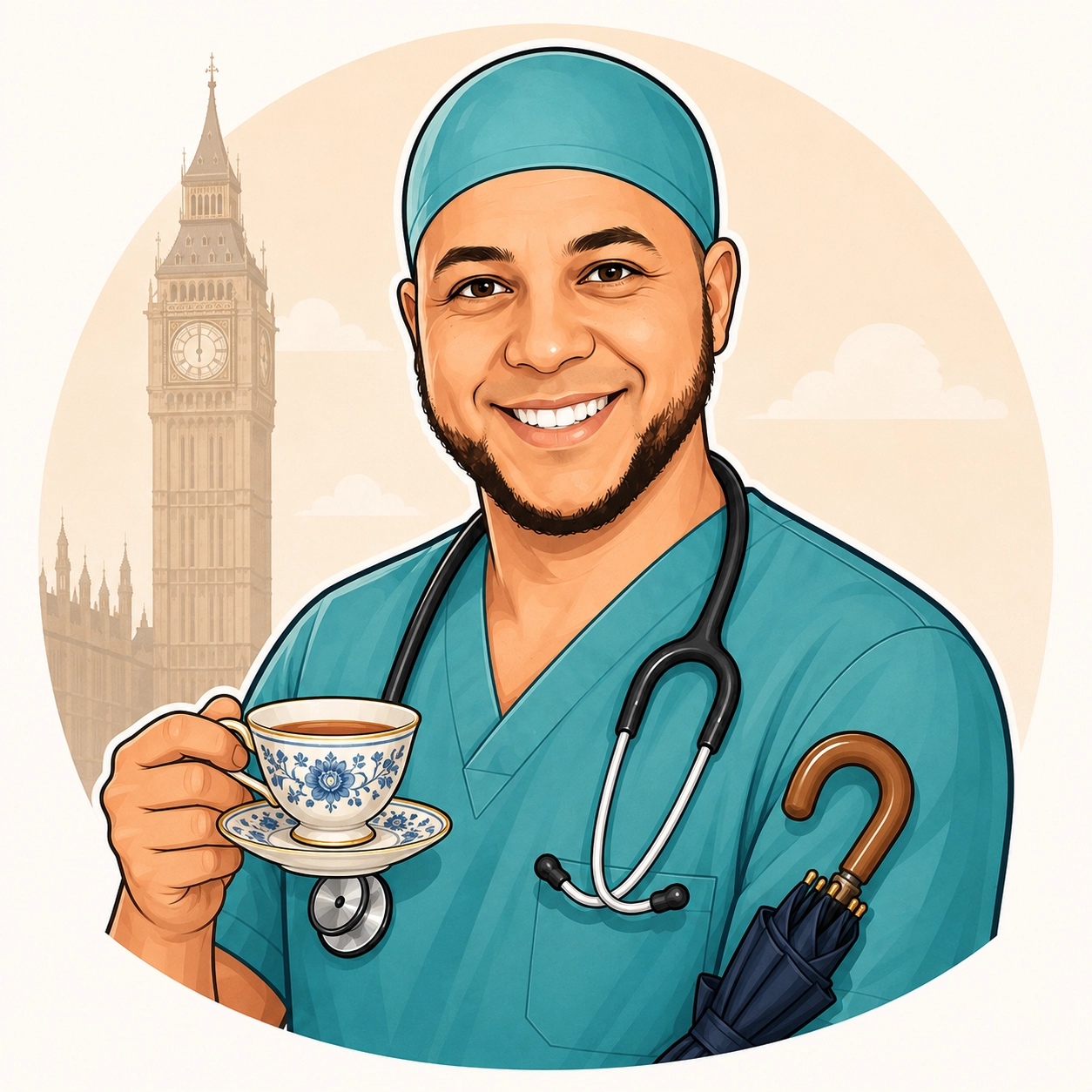
In brief: general anaesthesia is not an off switch. It is a carefully controlled sleep, watched minute by minute by someone whose only task in that room is you.
Most questions about anaesthesia are really questions about control: What happens while I am asleep? Will I wake up? Will it hurt? Here are clear answers, without medical jargon and without turning the operating theatre into a thriller.
Who the anaesthetist is and what they really do
The anaesthetist is the doctor responsible for you during the operation. While the surgeon works, the anaesthetist monitors your breathing, blood pressure, heart rhythm, oxygen level, temperature, and depth of anaesthesia.
This is not a background job. Anaesthesia is its own specialty. The work is not “medicine in, kettle on”; it is real-time care of breathing, circulation, pain, fluids, temperature, and emergency readiness. A bit like a cockpit, only with more blood pressure cuffs and rather less view.
Before the procedure, you will have a pre-operative anaesthetic assessment. Medical conditions, medicines, allergies, previous anaesthetics, loose teeth, reflux, sleep apnoea, pregnancy, alcohol or drug use, and your concerns are discussed. Consent is also reviewed. This is not just paperwork; it is your moment to ask what you need to ask.
Please do not keep things back. Anaesthetists are not judging your life choices. They are working out risk. Even awkward details can be useful clinical information.
How general anaesthesia happens: five steps
- Preparation. You have ECG stickers, a blood pressure cuff, and an oxygen probe on your finger. A cannula is placed, usually in the hand or forearm.
- Oxygen. Before you go off to sleep, you breathe oxygen through a mask. This fills up the body’s oxygen reserve. The mask is not a muzzle, though it may have ambitions.
- Induction. The anaesthetic medicine runs through the cannula. Going to sleep usually takes seconds. Some people feel warmth, dizziness, or aching in the vein.
- Maintenance. During the operation, anaesthesia is adjusted continuously. Breathing is supported, pain is treated, and circulation is kept steady.
- Waking. At the end, the medicines are reduced or stopped. You wake in theatre or recovery, where breathing, circulation, pain, and sickness are monitored.
What you may feel
Before anaesthesia, you may notice the blood pressure cuff, sticky ECG pads, oxygen mask, and the small scratch of the cannula. Some people chat, some go quiet, some feel tense. All normal. Nobody is expected to be elegant in an anaesthetic room.
As you go to sleep, a medicine may briefly sting or ache in the vein. It is unpleasant but usually very short. Often there is a warm, heavy feeling, and then that is it. You do not need to help yourself fall asleep. This is one of the few occasions where nodding off is actively encouraged.
During the operation, with adequate general anaesthesia, you should feel no pain and have no memory of the procedure. The anaesthetic is adjusted throughout. If your body reacts, the team sees changes in blood pressure, pulse, breathing, movement, tears, or other signs and responds.
When you wake, you may feel drowsy, thirsty, cold, or a little muddled. The first few minutes may be fuzzy. This does not mean anything has gone wrong. The brain is coming back online, and occasionally does so with theatrical pauses.
Please say straight away: pain, sickness, breathlessness, strong fear, sore throat, chest pressure, tooth pain, or the feeling that something is not right. Recovery has treatments for most things. Mind reading remains disappointingly unavailable.
Breathing, tube, and laryngeal mask
General anaesthetic medicines often relax breathing as well as consciousness. That is why your breathing may be supported or temporarily taken over. Depending on the procedure, the team may use a laryngeal mask sitting in the throat, or a breathing tube placed into the windpipe.
You usually do not notice this because it is inserted after you are asleep and removed before or during waking. Afterwards, a sore throat, hoarse voice, or mild swallowing discomfort can occur. Annoying, but usually much better within a day or two.
Tell the team about loose teeth, crowns or bridges, limited mouth opening, sleep apnoea, loud snoring, reflux, or any previous difficult ventilation or intubation.
Fasting before anaesthesia
Fasting reduces the risk of stomach contents entering the lungs while you are asleep. That is rare, but serious enough for the rules to matter.
6 hours without solid food or milk products
2 hours without clear fluids
6 hours without solid food; cow’s milk and sweets count
4 hours without breast milk for infants
3 hours without formula or cow’s milk for young children
1 hour without clear fluids
Clear fluids include water, tea, black coffee, or clear apple juice without pulp. Milky coffee, cocoa, smoothies, protein shakes, juice with pulp, alcohol, and bubble tea are not clear fluids. A smoothie is a meal in a glass. Even if it looks virtuous.
Regular medicines are often taken with a sip of water, but there are important exceptions, especially diabetes medicines, blood thinners, and some weight-loss or diabetes injections such as semaglutide or tirzepatide. Your anaesthetic team will advise you.
If you accidentally eat or drink: tell the team. It is not a confession; it is safety information. The operation may need to be delayed. Silence is the risky bit.
Worries about anaesthesia
Worrying about anaesthesia is common. The three big concerns are not waking up, waking during the operation, and losing control. Each deserves a direct answer.
Not waking up. Modern anaesthesia is very safe. In generally healthy people, the risk of a severe complication from the anaesthetic itself is very low. Much of the risk depends on medical conditions, age, urgency, and the operation.
Waking during surgery is called awareness. It is very rare. Anaesthetic depth is monitored throughout and, in higher-risk situations, may be supported by additional monitors.
Losing control. This is often the most honest fear. You are not throwing control away; you are temporarily handing it to someone whose whole job during the operation is you.
Say so. There may be calming medicine, music until you go to sleep, a quieter induction, or someone explaining each step. Anxiety is not a nuisance. It is useful clinical information.
Children and anaesthesia
For parents, a child’s anaesthetic is often harder than it is for the child. Children read the room closely. A calm parent is not magic, but it is a very good start.
- Explain honestly. Better than “it is nothing” is: “The doctor will help you have a sleep, and I’ll be there when you wake.”
- Bring comfort. A favourite toy or blanket can help and is often welcome.
- Take fasting seriously. Ask for exact drinking times so the child does not fast longer than needed.
- Waking can look unsettled. Some children cry, wriggle, or are difficult to comfort briefly. This is common and passes.
- Parents may ask. Twice. Three times. The team has met anxious parents before.
Risks and side effects
General anaesthesia is a well-established procedure. Side effects and rare complications can still occur. The reassuring part: breathing, circulation, and oxygen are monitored continuously, and the team can respond immediately.
- Nausea and vomiting. More common in women, non-smokers, people with travel sickness, and anyone who was sick after a previous anaesthetic. Tell the team; prevention helps.
- Sore throat and hoarseness. Often from the breathing tube or laryngeal mask. Usually improves within one or two days.
- Feeling cold and shivering. Common after operations. Warm blankets are not decoration; they are treatment with excellent public relations.
- Pain after surgery. Surgical pain often begins as you wake. Pain relief is planned during and after anaesthesia.
- Drowsiness or confusion. Especially in older adults, temporary confusion can occur and is watched carefully.
- Circulation changes. Blood pressure and pulse may change. That is why you are monitored, not merely hoped over.
- Dental injury. Rare, but possible, especially with loose teeth, crowns, bridges, or a difficult airway.
- Allergic reactions. Very rare reactions to medicines, latex, or antiseptics can occur. Known allergies matter.
- Aspiration. If stomach contents enter the lungs, pneumonia can develop. This is why fasting rules exist.
- Serious complications. Heart, breathing, or other severe events are rare, but depend strongly on health and the operation.
After the operation, report immediately: severe pain, breathlessness, chest pressure, severe sickness, new weakness, confusion, allergy signs, dental injury, or feeling unable to wake properly.
Afterwards: waking, sickness, sore throat
Waking is gradual. In the first half hour, it is normal to feel drowsy, cold, thirsty, or not remember the first words clearly. Usually it is not danger; it is anaesthetic medicine wearing off.
Sickness is unpleasant but treatable. If previous anaesthetics made you sick or you get travel sickness, say so beforehand. Preventive medicine may help.
Sore throat often comes from the airway device. Drinking when allowed and patience usually help. Severe pain, breathlessness, or blood should be reported immediately.
After day-case anaesthesia, for 24 hours: do not drive, drink alcohol, sign important documents, operate machinery, or stay alone at home. Judgement recovers more slowly than the feeling of clarity.
Common questions about general anaesthesia
How long must I fast before anaesthesia?
Often six hours for solid food and milk products. Clear fluids are often allowed until two hours before in adults and one hour before in healthy children. Your hospital’s instructions come first.
May I drink water before surgery?
Often yes, for adults until two hours before. It can reduce thirst, headache, and discomfort. Only do this if your hospital allows it.
May I smoke before anaesthesia?
Better not. Smoking irritates the airways and increases secretions. Even a short pause before surgery is better than none.
Will I wake during surgery?
This is very rare. Anaesthesia is monitored and adjusted throughout. If you have a higher risk or have experienced awareness before, say so at assessment.
Why remove jewellery, contact lenses, and nail varnish?
Jewellery and piercings can injure or get in the way, contact lenses are not ideal with closed eyes, and nail varnish may interfere with the oxygen probe.
What must I tell the anaesthetist?
Medicines including supplements, allergies, heart or lung disease, sleep apnoea, loud snoring, reflux, previous anaesthetic problems, possible pregnancy, alcohol or drug use. This is not about judging you.
What is the difference between general anaesthesia, sedation, and regional anaesthesia?
With general anaesthesia, you are fully asleep and breathing is often supported. With sedation, you are relaxed or drowsy. With regional anaesthesia, one body area is numbed while you may stay awake.
When may I eat again?
Usually with small sips of water once you are awake enough and there is no reason to wait. Light food follows. Some operations, especially abdominal surgery, have different rules.
Further reading
This page follows current patient information and anaesthetic recommendations on general anaesthesia, fasting, and common side effects. Primary sources:
- NHS — general anaesthesia, process, side effects, and risks.
- Royal College of Anaesthetists — patient information on general anaesthesia.
- International consensus statement, 2026 — pre-operative fasting in adults.
Dreamdoc explains anaesthesia and regional anaesthesia with illustrations, checklists, and clear texts for adults, teenagers, children, and parents.
To the interactive homepage →
Find Dreamdocs near you · Full medical notice
Medical note: This information is general and does not replace a personal conversation with your anaesthetic team. The rules that apply to you depend on your situation, medicines, medical conditions, procedure, and local policy. In an emergency, call your local emergency number. — Last updated: July 2026.

 Scannen. Verstehen. Entspannter sein.
www.traumarzt.com
Scannen. Verstehen. Entspannter sein.
www.traumarzt.com